

- Category: TV Reviews
- Written by Rick Ellis
-

Review: 'Muscle Shoals'
If there was a Golden Age of music, it was most likely the 60s and 70s. Now, I don't say this as part of some older guy rant about the current music scene and I'm not arguing that there aren't a lot of great musicians around today. But if you're looking for a time when it was fun to be a music fan, when being part of the music scene seemed magical and new, then you have to go back to those two decades.
What made that time magical for the music industry was the lack of barriers. Your local radio station wasn't part of some 800+ station conglomerate that ensures all their stations sound the same. Someone locally picked what songs got played and that playlist was a mix of national hits and bands that may only be popular regionally. Your morning DJ took requests and if he really liked a song, he'd play it whether it was on the playlist or not.
The 60s and 70s were also a time of small indie labels and regional companies that may only have three or four bands signed at any one time. That glut of small labels, along with less regimented radio station playlists, made a diversity of sound possible that seems unimaginable in today's music industry.
Much of the music we think of as the best of that era is the result of those opportunities. Can you imagine a label such as Detroit-based Motown thriving in the world of today? This was a time when music labels had a "sound," and fans would often buy every single released by the label whether they knew the band or not.
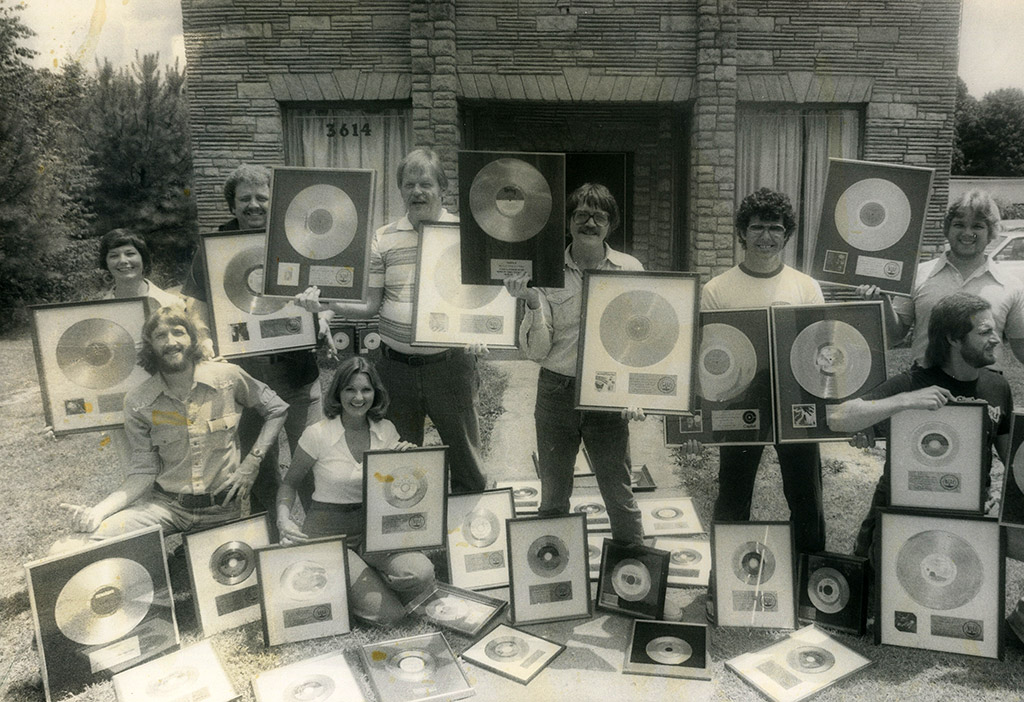
It was that world that made possible the success of the Muscle Shoals, Alabama FAME music studio. The studio was just one of hundreds of similar studios that dotted the U.S. in the 60s. Like most small studios, it focused on primarily regional musicians and studio owner Rick Hall collected an inhouse band of that was a mix of colors, backgrounds and musical influences. While the beginnings of the studio might have been unplanned and contentious, the result was a studio and band that is responsible for some of the finest music of the era.
The PBS documentary series "Independent Lens" takes a look at the history of FAME Studios and the Muscle Shoals movement in "Muscle Shoals" which premieres tonight. It's a story that is both uplifting and bittersweet, since it tells the story of a music explosion that truly is from a different era.
Rick Hall was the son of a sharecropper who broke into the music business writing songs in the early 1960 for the like of Roy Orbison and Brenda Lee. But it was his decision to launch FAME Studios that changed his life and the music business forever.
At a time when racial tensions were at their highest in the South, Hall created an oasis of calm in Muscle Shoals. He recruited an inhouse band nicknamed "The Swampers" and they created some of the defining music of the era.
At first, the FAME Studios success was primarily in the R&B field, with hits by Joe Tex, Jimmy Hughes and Etta James. Then as R&B and soul music went mainstream, the studio began cranking out the hits, including Percy Sledge's "When A Man Loves A Woman," Clarence Carter's "Slip Away" and "Patches," as well as a string of hits for Wilson Pickett and Aretha Franklin.
Even small players at FAME had a tendency to shake things up musically. Guitarist Duane Allman got his start playing on sessions at FAME and during a session with Wilson Pickett, he convinced the R&B singer to record a cover version of The Beatles "Hey Jude." That guitar-laden track turned out to be not just an R&B hit for Pickett, but it inspired the Southern rock sound later made popular by the Allman Brothers and Lynyrd Skynyrd.
But for all of his genius, Hall could be a perfectionist. His difficult streak lead the Swampers to break away and form the rival Muscle Shoals Sound Studio, where they played on everything from the Rolling Stones "Brown Sugar" to Paul Simon's "Kodachrome." But for all of the turmoil, the success of his studio inspired a raft of regional music labels (most notably Memphis-based Stax Records) and a couple of hundred tunes that truly are core parts of the American music scene.
With the exit of the Swampers, Hall and FAME went on to find continued success in the 1970s focusing on white country acts such as Bobby Gentry and Mac Davis. Davis recorded a string of hits at FAME, including "Baby, Don't Get Hooked On Me" and "Stop and Smell The Roses." The Osmonds had their greatest commercial success while recording at FAME, with hits "One Bad Apple" and "Down By The Lazy River." The FAME label also signed Paul Anka and he had a string of 1970s pop hits that include "You're Having My Baby" and "One Man Woman."
Today, the blind 82-year-old Hall still has a stable of songwriters working for him and he explains towards the end of the documentary that the "money in music is in the songwriting. You don't have to beat up anybody to get paid."
"Muscle Shoals" is a fabulous documentary and it highlights a time in music when anything seemed possible. It's an inspiring story, but it's also sad, given the impossibility of it happening in today's music industry.